Questão 49914
UNESP 2016
(UNESP - 2016/2 - 2ª fase)
Can you see a duck or a rabbit? Apparently this optical illusion says a lot about your creativity
Michael Morrow
February 15, 2016
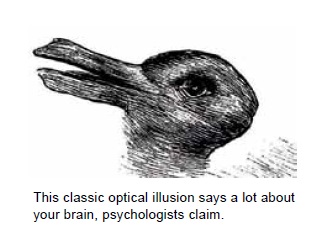
This classic optical illusion says a lot about your brain, psychologists claim. More than 100 years after it was first created, this image is once again sparking a huge reaction after being shared on social media. Some see a rabbit and some see a duck, but some people can see both alternatively. The drawing first appeared in a German magazine in 1892 and was first used by American psychologist Joseph Jastrow soon after.
UK’s Independent reports that Jastrow used the image to make the point that perception is not only what one sees but also a mental activity. Jastrow’s research was based on how quickly one can see the second animal and how fast participants could change their perception of the drawing to switch between the two animals. His research suggests the quicker you can do this, the more creative you are.
This optical illusion is just one of many that have gone viral on social media over the past year.
(www.news.com.au. Adaptado.)
O que o psicólogo Joseph Jastrow pretendia comprovar com sua pesquisa e no que ela se baseou?
Gabarito: