Questão 21
UNESP 2023
(UNESP - 1ª FASE)
Examine o gráfico e o mapa e leia o texto para responder às questões de 21 a 26.
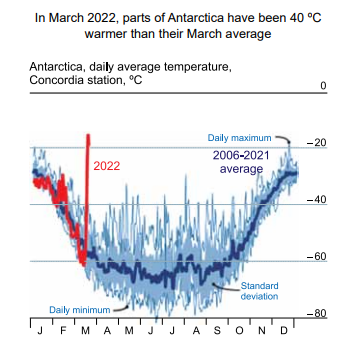
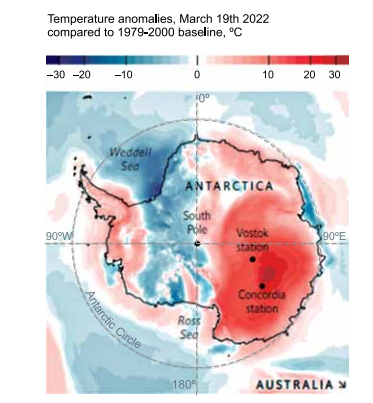
The Concordia research station is one of the most inhospitable places on Earth. At 3,000m above sea level on the Antarctic Plateau, the temperature rarely rises above -25 ºC even in the summer. In midwinter it can fall to around -80 ºC. The air is painfully dry, and fingers, toes and noses can freeze in minutes. The dozen or so crew, mainly French and Italian, who live and work in the station would normally venture out only for essential work. But Concordia has recently experienced a heatwave. On March 18th the temperature reached a high of -11.8 ºC — more than 40 ºC warmer than the average for this time of year.
Similarly freakish weather was recorded across eastern Antarctica. Temperatures at the Russian-run Vostok research station rose to -17.7 ºC, more than 15 ºC above the previous record for March, set in 1967. Across the continent temperatures were 4.5 ºC higher than usual (though in recent days they have returned to a normal range).
Meteorologists have attributed the latest heatwave to an atmospheric “river” of warm, damp air blowing towards Antarctica from the Southern Ocean near Australia. It is difficult to know whether climate change is to blame for one-off weather events. But over the past 65 years or so there has been an increase in the number of “high temperature” days at Antarctic stations.
Most regions of Antarctica have been spared global warming. In the late 20th century, a large hole opened up in the ozone layer above the South Pole. This has a regional cooling effect, which has offset much of the heating caused by rising concentrations of greenhouse gases in the atmosphere. Temperatures on the continent rarely climb above freezing, which preserves its vast ice sheets (although rising sea temperatures do threaten some areas). Even in the recent surge, temperatures stayed well below zero.
(www.economist.com, 24.03.2022. Adaptado.)
The information presented by the graph, the map and the text show that in March 2022
there was a heatwave in Antarctica and temperature rose well above average.
the temperature in eastern Antarctica was 17.7 ºC warmer than usual.
the South Pole reached the unusual temperature of 40 ºC for one day in some areas.
both Vostok and Concordia stations experienced low temperatures above zero.
the minimum temperature reached -25 ºC, as usual.
Gabarito:
there was a heatwave in Antarctica and temperature rose well above average.
Resolução:
a) Alternativa correta. Isso pode ser comprovado em "On March 18th the temperature reached a high of -11.8 ºC — more than 40 ºC warmer than the average for this time of year".
b) Alternativa incorreta. Na verdade, "Temperatures at the Russian-run Vostok research station rose to -17.7 ºC, more than 15 ºC above the previous record for March, set in 1967", ou seja, -17,7 ºC foi a temperatura atingida na estação de Vostok.
c) Alternativa incorreta. A temperatura atingida foi de -11,8 ºC. A medida de 40 ºC refere-se à diferença entre essa temperatura e a média de temperatura nessa parte do ano.
d) Alternativa incorreta. Em Concordia, a temperatura chegou a -11,8 ºC, enquanto, em Vostok, a temperatura chegou a -17,7 ºC.
e) Alternativa incorreta. Essa temperatura diz respeito à temperatura máxima usual no verão da Antártica.