Questão 29
UNESP 2021
(UNESP - 2021 - 1ª fase)
Analise o gráfico e leia o texto para responder às questões de 25 a 30.
The cost of closed schools
Countries’ response to school closures
By remote-learning type and income group, %
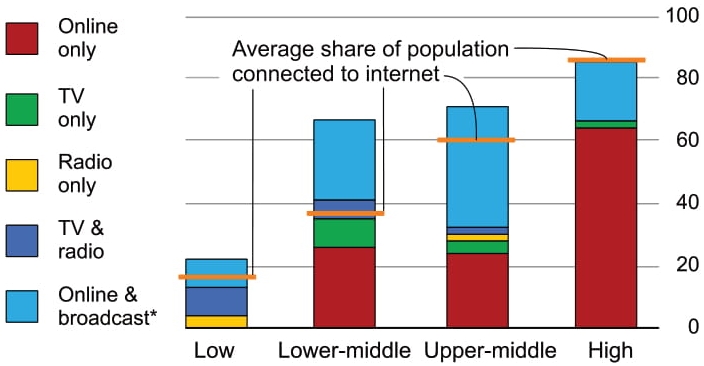
*TV and/or radio
Three-quarters of the world’s children live in countries where classrooms are closed. As lockdowns ease, schools should be among the first places to reopen. Children seem to be less likely than adults to catch covid-19. And the costs of closure are staggering: in the lost productivity of home schooling parents; and, far more important, in the damage done to children by lost learning. The costs fall most heavily on the youngest, who among other things miss out on picking up social and emotional skills; and on the less welloff, who are less likely to attend online lessons and who may be missing meals as well as classes. West African children whose schools were closed during the Ebola epidemic in 2014 are still paying the price.
(www.economist.com, 01.05.2020. Adaptado.)
No trecho “who are less likely to attend online lessons”, o termo sublinhado pode ser substituído, sem alteração de sentido, por
alert.
skilled.
competent.
prone.
willing.
Gabarito:
prone.
Resolução:
a) INCORRETA, já que "alert", está relacionado a um estado, não à probabilidade, tendência, como é o caso de "likely".
b) INCORRETA, uma vez que "skilled" significa "habilidoso", não trazendo o mesmo sentido de "propenso" de "likely".
c) INCORRETA, dado que "competent" tem um sentido diferente de "likely", indicando "competência", não probabilidade, ou seja, são coisas diferentes.
d) CORRETA, pois "prone" significa "propenso", sendo um adjetivo que possui sentido semelhante à "likely", que indica "provável". Ambos os termos poderiam ser utilizados sem causar prejuízos de sentido ao texto.
e) INCORRETA, visto que "willing" indica uma vontade, significa "estar disposto" a fazer algo, nesse sentido, não poderia ser empregado no lugar de "likely", já que aqui falamos de algo imperativo, ao passo que "likely" indica algo mais provável.