Questão 33
UNESP 2020
(UNESP - 2020 - 2ª FASE)
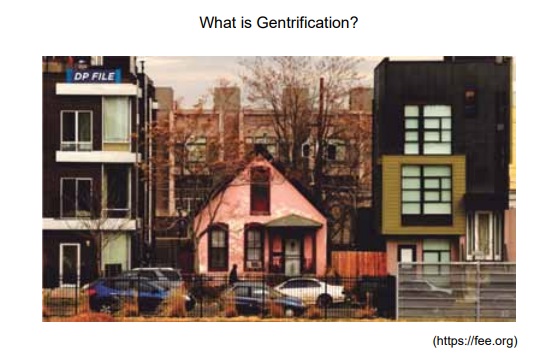
Gentrification is a general term for the arrival of higher-income people in an existing working-class urban district, causing a related increase in rents and property values, and changes in the district’s character and culture. The term is often used negatively, suggesting the displacement of low-income communities by affluent outsiders. But the effects of gentrification are complex and contradictory, and its real impact varies.
Many aspects of the gentrification process are desirable. Who wouldn’t want to see reduced crime, new investment in buildings and infrastructure, and increased economic activity in their neighborhoods? Unfortunately, the benefits of these changes are often enjoyed disproportionately by the new arrivals, while the established residents find themselves economically and socially marginalized.
Although there is not a clear-cut technical definition of gentrification, it is characterized by several changes:
- Demographics: An increase in median income, a decline in the proportion of ethnic minorities, and a reduction in household size, as low-income families are replaced by young singles and couples.
- Real estate markets: Large increases in rents and home prices, increases in the number of evictions, conversion of rental units to ownership (condos) and new development of luxury housing.
- Land use: A decline in industrial uses, an increase in office or multimedia uses, the development of live-work “lofts” and high-end housing, retail, and restaurants.
- Culture and character: New ideas about what is desirable and attractive, including standards (either informal or legal) for architecture, landscaping, public behavior, noise, and nuisance.
(http://archive.pov.org. Adaptado.)
a) Como a pergunta do título do texto é respondida no primeiro parágrafo? Quais consequências da gentrificação para o mercado imobiliário são citadas no primeiro parágrafo?
b) De acordo com o primeiro parágrafo, por que o termo gentrificação pode ter conotação negativa? Qual ponto de vista é apresentado sobre isso no primeiro parágrafo?
Gabarito:
Resolução:
a) A resposta para a pergunta do título, "o que é gentrificação?", é respondida no trecho "Gentrification is a general term for the arrival of higher-income people in an existing working-class urban district". As consequências para o mercado imobiliário mencionadas são o aumento nos aluguéis e no valor das propriedades.
b) O primeiro parágrafo explica que o termo "gentrificação" é utilizado negativamente por sugerir a mudança das comunidades mais pobres a partir da chegada de pessoas de fora. Acerca disso, o primeiro parágrafo cita que a gentrificação causa mudanças no caráter e na cultura do distrito.